
Sleep Research Reference
The Architecture of Rest: What Sleep Research Actually Shows
Sleep is not one switch. Slow-wave sleep, REM, the timing of the night and the hormones released inside it are separate systems, and the compounds that come up in sleep research are studied for different parts of it. The peptide with sleep in its name turns out to have one of the thinnest evidence bases here, and the best-supported finding in this whole area is not about a peptide at all.
1968
Year the sleep-onset growth hormone pulse was first described
~70%
Share of men's daily growth hormone output released in early sleep
None
Receptor, gene or precursor identified for DSIP since its 1977 discovery
Why this needs care
Timing, tone and hormones, not sedation
A sedative's job is to lower arousal so that sleep can begin. The compounds in this reference are studied for something narrower: the timing of the night, the stress tone going into it, and the hormones released inside it.
That is also why the claims around them need care. Much of what circulates about sleep peptides is extrapolated from animal work, from a change in a hormone level, or from small human studies that are decades old. Below, compound by compound, is what the research actually measured, in what model, and how far it goes.
The best-supported finding
The night's biggest growth hormone pulse
In 1968, researchers sampling blood through the night found a growth hormone peak lasting one and a half to three and a half hours that arrived with the onset of deep sleep in seven of eight young adults, and moved later when sleep was delayed (Takahashi et al., 1968). In men, roughly 70% of the day's growth hormone output happens in early sleep. In women the link is looser and more variable.
In 149 healthy men, slow-wave sleep fell from 18.9% of the night at ages 16 to 25 to 3.4% at ages 36 to 50, with growth hormone secretion falling alongside it (Van Cauter et al., 2000). That link is why growth hormone compounds come up in sleep research at all. Here is what has actually been tested:
- Natural GHRH, given to seven men, raised slow-wave sleep from 14.0% to 20.2% of the night. The effect depended on timing, and in women GHRH reduced non-REM sleep.
- MK-677, an oral ghrelin-receptor agonist, increased the deepest stage of sleep by about 50% and REM by more than 20% in eight young adults.
- Other ghrelin-receptor agonists went the other way: GHRP-6 left slow-wave sleep unchanged and hexarelin reduced it.
- CJC-1295 and Ipamorelin: no published study has recorded sleep in people or animals given either one.
- CJC-1295 with DAC does not add a night-time pulse. Overnight sampling in healthy men found the normal pulses unchanged while the baseline between them rose 7.5-fold: a sustained elevation, not a sharper spike.
DSIP
The one with sleep in its name
In 1977, Schoenenberger and Monnier in Basel recovered a nine-amino-acid peptide from the blood of rabbits whose thalamus was being electrically stimulated to induce sleep. Infused into the brains of other rabbits, it raised delta-wave EEG activity by about a third. They named it for that effect.
What followed is more interesting than the name. A 1980 rat study found no increase in sleep or delta activity at all (Tobler & Borbely, 1980). Much of the "DSIP-like" signal once measured in tissue was later traced to an unrelated protein, and a 2006 review in the Journal of Neurochemistry called DSIP a still unresolved riddle.
The human work is a handful of small studies, mostly from the 1980s, of six to eighteen people each, most of them from the original Basel group. Independent double-blind trials reported effects that were weak or of little clinical significance, and in the one study that broke sleep down by stage, the extra sleep was light stage 2 sleep; slow-wave and REM sleep did not change (Monti et al., 1987). The chemistry is solid. The question is still open, which is exactly what makes it a research compound.
- Sequence: Trp-Ala-Gly-Gly-Asp-Ala-Ser-Gly-Glu (WAGGDASGE).
- Receptor: none identified, nor a gene or precursor protein.
- Human sleep studies: small, mostly 1980s, largely from one group; independent replications weak.
Timing and tone
Epitalon and Selank: two different questions
Epitalon is a synthetic four-amino-acid peptide, Ala-Glu-Asp-Gly, designed in St. Petersburg from the makeup of a pineal gland extract. In aged rhesus monkeys, the group that developed it reported higher night-time melatonin after a short course, with no change in young animals. Almost all Epitalon research comes from that one network. It has no sleep, jet-lag or shift-work study in any species, and no registered clinical trial. Even its cell studies disagree: one group reported more melatonin from cultured rat pineal cells, while a Paris laboratory found no change in melatonin released from isolated rat pineal glands.
Selank is a seven-amino-acid peptide built from tuftsin, a fragment of an antibody protein, with a short tail added for stability. It was developed in Moscow and studied there as an anxiolytic, mostly in small Russian-language trials against benzodiazepines, which is why it appears in conversations about the stress side of sleep. No published study has measured sleep as an outcome.
- Epitalon: melatonin data in aged monkeys, one research network, no sleep study.
- Selank: studied as an anxiolytic, one research network, no sleep study.
The cortisol question
Stress hormones and the night
Across 20 studies, people with chronic insomnia had moderately higher cortisol than good sleepers (Dressle et al.). That is an association, not proof of cause, but it is why three compounds outside the peptide catalog keep coming up in the same conversation.
- Emodin, a compound from rhubarb root, inhibits 11β-HSD1, the enzyme that regenerates active cortisol inside tissues. That was shown in enzyme assays and in the liver and fat of mice; in rats it did not reach the brain. No study has connected it to sleep, and European food-safety regulators have flagged it as a genotoxicity concern.
- Magnesium L-threonate raised brain magnesium in a 2010 rat study. Human sleep trials are few and mixed, and in two of them the main sleep score did not separate from placebo.
- Phosphatidylserine has been tested against the cortisol response to daytime exercise and speaking stress, in small groups, with mixed results. None of those studies measured evening cortisol or sleep.
Read that carefully
Interesting is not the same as proven
Every compound finding above is either animal work, a change in a hormone level, or a small human study, most of them decades old. A sleep-onset hormone pulse, a melatonin level in an aged monkey and a delta-wave reading in a rabbit are each worth studying. None of them is a sleep result in people.
None of the peptides in this reference is an approved sleep treatment, and none has been shown in a well-controlled trial to improve sleep in people.
Safety & Disclaimers
Research Use Only
DSIP, Selank, Epitalon and CJC-1295 + Ipamorelin are experimental research compounds. None is FDA-approved, and their safety in humans has not been established through large-scale clinical trials.
All Revitalized research compounds are sold strictly for research use. Not for human consumption, diagnostic, or therapeutic use. Standard institutional biosafety guidelines apply.
References
Selected Literature
Takahashi Y, Kipnis DM, Daughaday WH (1968). Journal of Clinical Investigation, 47(9), 2079–2090. PMID 5675428.
Van Cauter E, Leproult R, Plat L (2000). JAMA, 284(7), 861–868. PMID 10938176.
Steiger A, et al. (1992). Neuroendocrinology, 56(4), 566–573. PMID 1361964.
Copinschi G, et al. (1997). Neuroendocrinology, 66(4), 278–286. PMID 9349662.
Ionescu M, Frohman LA (2006). Journal of Clinical Endocrinology & Metabolism, 91(12), 4792–4797. PMID 17018654.
Schoenenberger GA, Monnier M (1977). Proceedings of the National Academy of Sciences, 74(3), 1282–1286. PMID 265572.
Tobler I, Borbely AA (1980). Waking and Sleeping, 4(2), 139–153. PMID 7405185.
Kovalzon VM, Strekalova TV (2006). Delta sleep-inducing peptide (DSIP): a still unresolved riddle. Journal of Neurochemistry, 97(2), 303–309. PMID 16539679.
Monti JM, et al. (1987). International Journal of Clinical Pharmacology Research, 7(2), 105–110. PMID 3583493.
Goncharova ND, Vengerin AA, Shmaliĭ AV, Khavinson VKh (2003). Advances in Gerontology, 12, 121–127 (in Russian). PMID 14743609.
Filatova E, et al. (2017). Frontiers in Pharmacology, 8, 89. PMID 28293190.
Feng Y, et al. (2010). British Journal of Pharmacology, 161(1), 113–126. PMID 20718744.
Slutsky I, et al. (2010). Enhancement of learning and memory by elevating brain magnesium. Neuron, 65(2), 165–177. PMID 20152124.
Related Compounds
Continue Researching This Category
DSIP
Delta sleep-inducing peptide for sleep and stress research
from $60
SELANK
Anxiolytic peptide for stress and cognitive research
from $55
EPITALON
Telomerase activator for longevity research
from $75
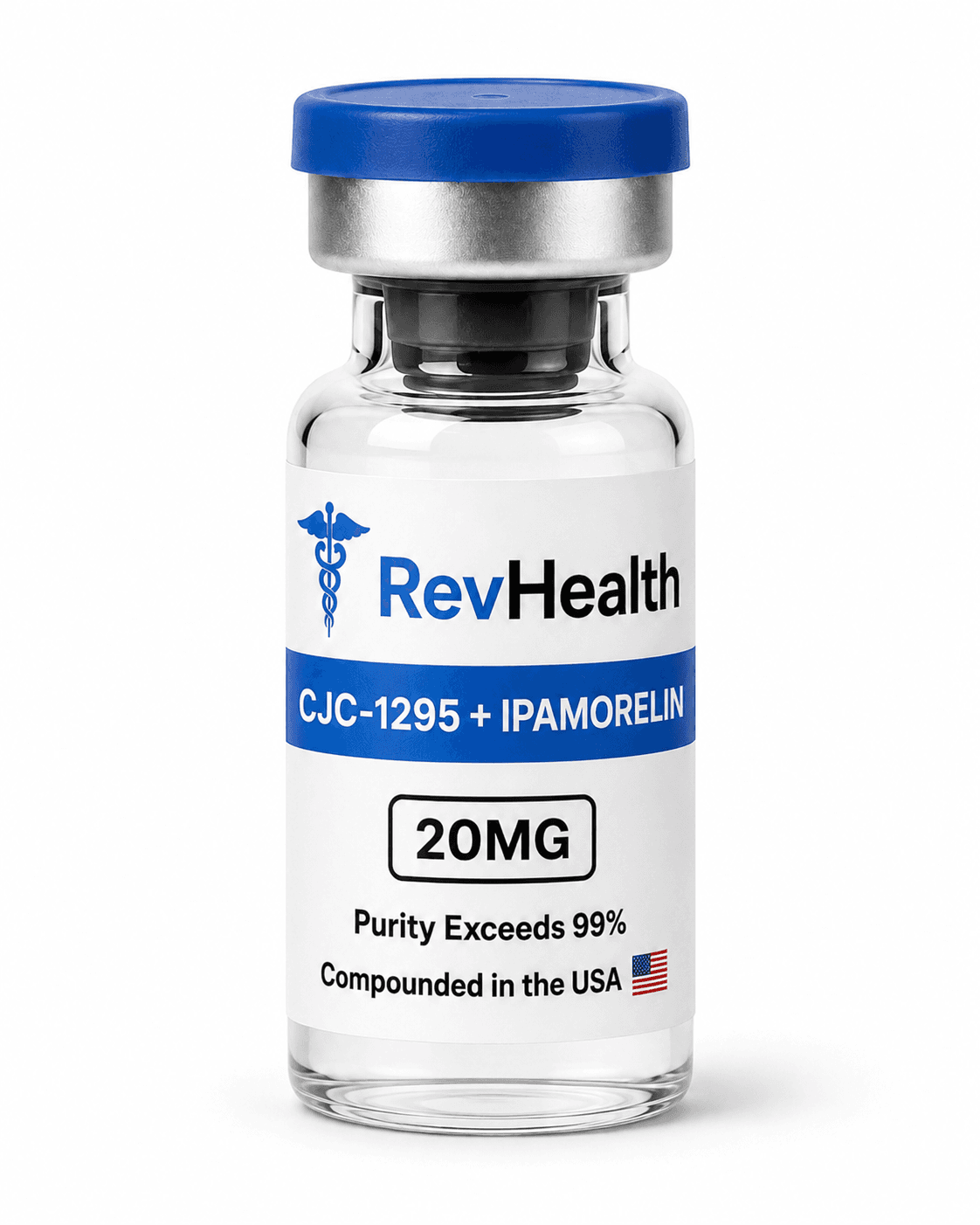
CJC-1295 + IPAMORELIN
Synergistic GH releasing peptide stack
from $85
Continue From This Update
Explore the research catalog behind these topics.
Browse verified research compounds with third-party analytical documentation and category-specific product pages.
Shop Research PeptidesResearch use only. This article is educational and does not constitute medical advice. Products referenced on Revitalized Health are not intended for human or veterinary use, diagnostic use, therapeutic use, or consumption.