
Hormone Research Reference
Stimulating the Body's Own Pathways: Clomiphene (Clomid) as a SERM in Male Hormone Research
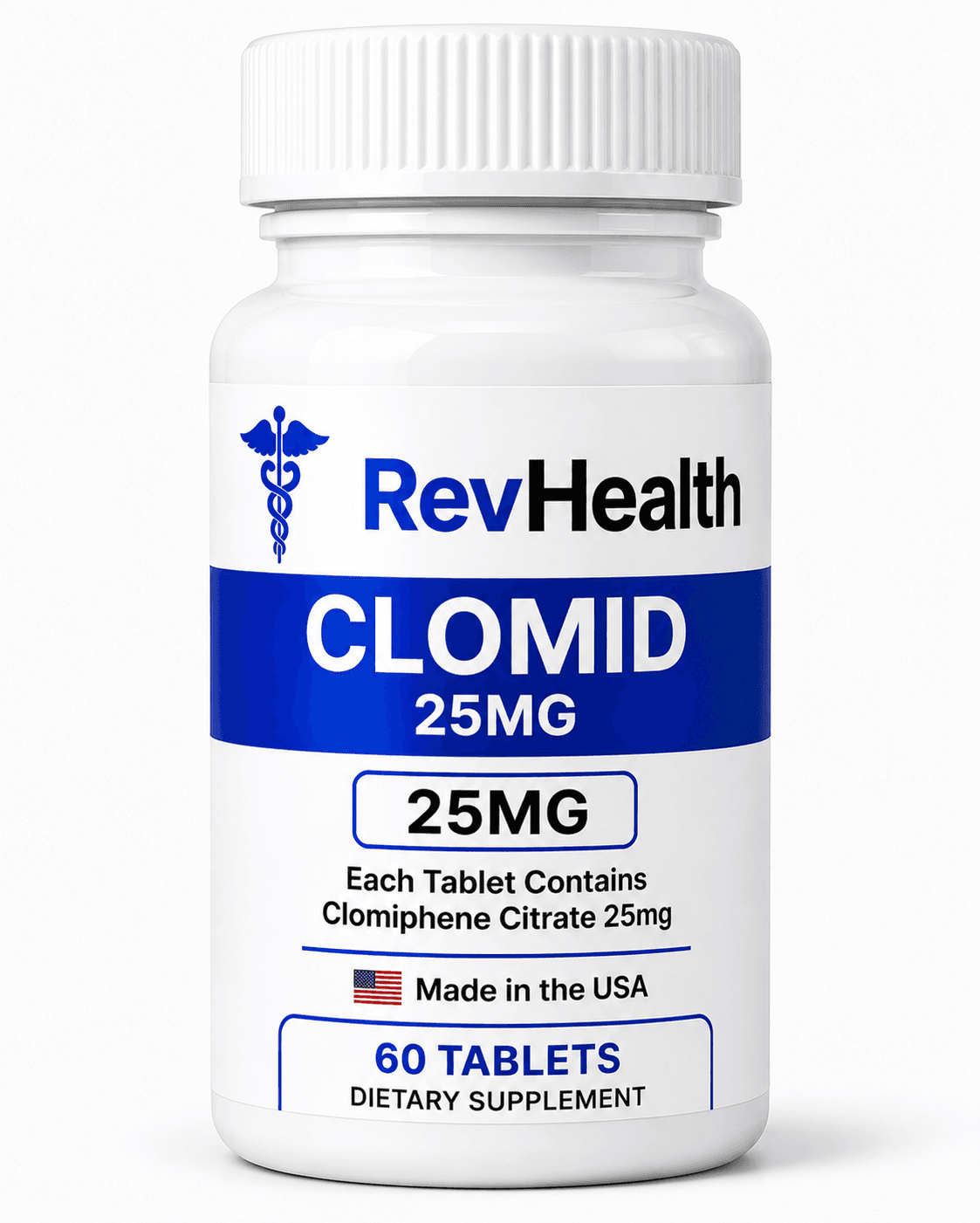
Clomiphene citrate (Clomid) is best known for female fertility, but has drawn attention in men's health as an off-label tool for hormone optimization. Unlike TRT — which supplies exogenous hormones — Clomid stimulates the body's own production pathways. Here's how it works as a SERM, and the applications researchers and clinicians study.
SERM
Selective Estrogen Receptor Modulator — manipulates estrogen feedback
LH + FSH
Raises gonadotropins to stimulate endogenous testosterone and spermatogenesis
Off-label
Not FDA-approved for men — used off-label; research/educational reference
Overview
What clomiphene actually is
Clomiphene citrate, commonly known by the brand name Clomid, is a medication primarily recognized for its role in female fertility.
In recent years it has gained significant attention in men's health circles as an off-label tool for hormone optimization. Unlike Testosterone Replacement Therapy (TRT), which provides exogenous hormones, Clomid acts as a stimulator of the body's own natural production pathways.
The science
Mechanism of action
Clomid is classified as a Selective Estrogen Receptor Modulator (SERM). Its primary function in both sexes is to manipulate the body's interpretation of estrogen levels.
Blocking estrogen feedback: in the hypothalamus and pituitary gland, estrogen typically exerts a negative-feedback signal telling the brain to reduce gonadotropin production. Hypothalamic trick: Clomid binds and blocks estrogen receptors in the brain, so the brain — unable to see circulating estrogen — perceives it as low.
Signal cascade: in response, the hypothalamus increases Gonadotropin-Releasing Hormone (GnRH), which triggers the anterior pituitary to release higher levels of Luteinizing Hormone (LH), stimulating Leydig cells to produce endogenous testosterone, and Follicle-Stimulating Hormone (FSH), supporting spermatogenesis.
- Blocks estrogen receptors in the hypothalamus/pituitary.
- Brain perceives low estrogen → increases GnRH.
- Higher LH → endogenous testosterone; higher FSH → sperm production.
Applications
Potential applications in male health
While not an FDA-approved treatment for men, clinicians may prescribe it off-label to address specific hormonal concerns.
- Secondary hypogonadism: for men whose low testosterone stems from insufficient brain signaling (pituitary/hypothalamic dysfunction) rather than testicular failure.
- Fertility preservation: because it stimulates the body's own hormones, it does not cause the testicular atrophy or sperm-production suppression often associated with exogenous TRT.
- Hormone optimization: for men aiming to boost natural testosterone while avoiding the long-term dependency or fertility suppression seen with synthetic testosterone injections.
Medical disclaimer
Read before acting on any of this
This information is for educational and informational purposes only. It does not constitute medical advice, diagnosis, or treatment. Clomiphene is not FDA-approved for use in men; any off-label use carries risks that should be evaluated by a licensed professional.
Always consult a licensed physician — particularly an endocrinologist or qualified medical professional — before starting, combining, or altering any pharmaceutical regimen. All compounds sold through RevHealth are for research use only — not for human consumption.
Related Compounds
Continue Researching This Category
Continue From This Update
Explore the research catalog behind these topics.
Browse verified research compounds with third-party analytical documentation and category-specific product pages.
Shop Research PeptidesResearch use only. This article is educational and does not constitute medical advice. Products referenced on Revitalized Health are not intended for human or veterinary use, diagnostic use, therapeutic use, or consumption.