
Vascular Research Reference
Tadalafil: A Systemic Vascular and Metabolic Research Profile
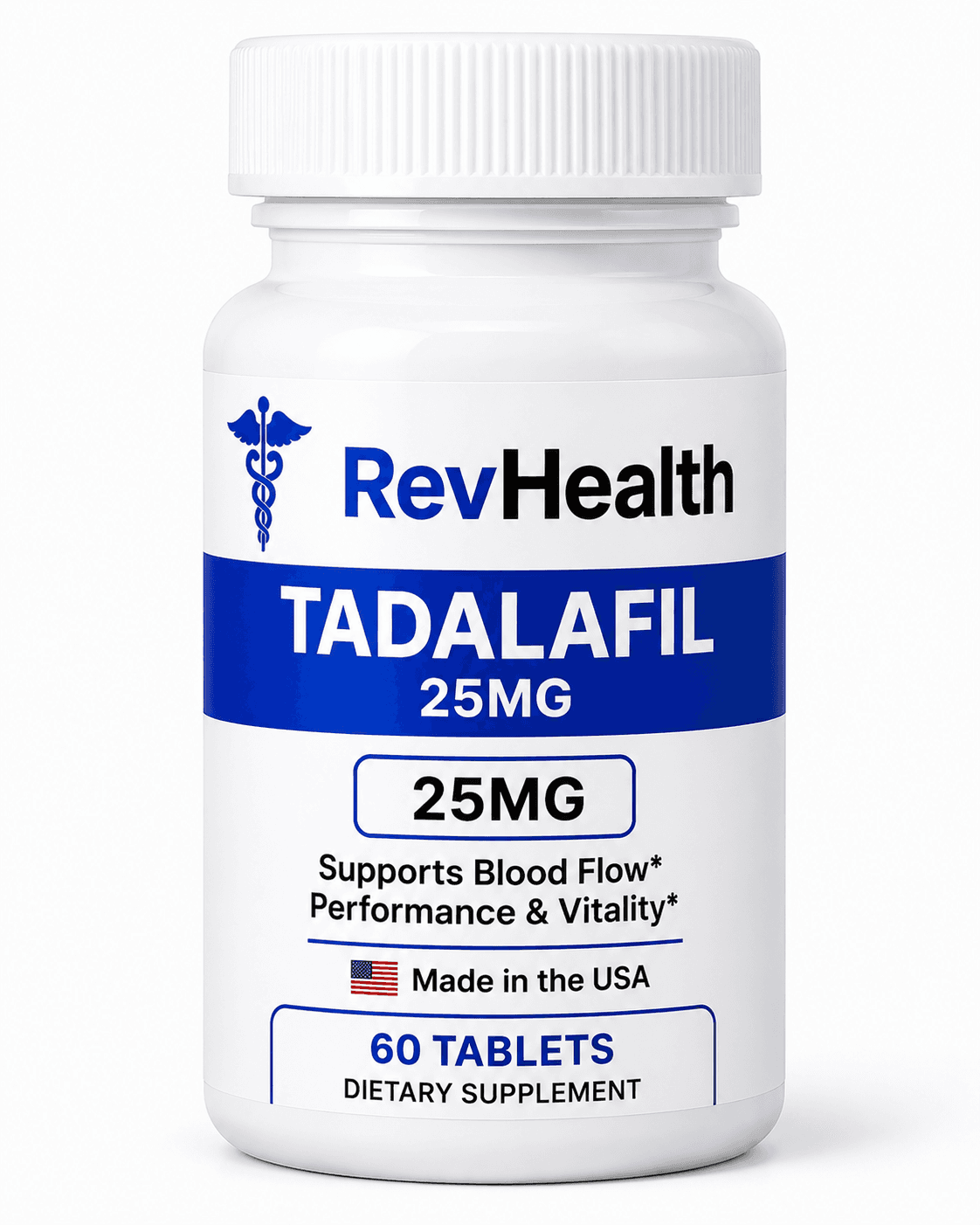
Tadalafil is best known as Cialis, but its systemic effects have made it a subject of interest across cardiovascular health, prostatic health, exercise physiology, and longevity research. As a long-acting PDE5 inhibitor, it works through the nitric oxide pathway to preserve cGMP and promote vasodilation throughout the body. Here's the mechanism, the applications researchers study, and the considerations that come with them.
PDE5
Selectively inhibits the PDE5 enzyme to preserve cGMP
~17.5 hr
Long terminal half-life — a therapeutic window up to 36 hours
NO pathway
Promotes vasodilation and increased systemic blood flow
Overview
What tadalafil actually is
Tadalafil, widely recognized by the brand name Cialis, is a member of the phosphodiesterase type 5 (PDE5) inhibitor class of medications.
While primarily FDA-approved for benign prostatic hyperplasia (BPH) and pulmonary arterial hypertension (PAH), its systemic effects have made it a subject of interest in fields ranging from cardiovascular health to sports performance and longevity.
The science
Mechanism of action
The physiological effects of tadalafil are driven by its interaction with the nitric oxide (NO) pathway.
Enzyme inhibition: Tadalafil selectively inhibits the PDE5 enzyme. cGMP preservation: PDE5 is responsible for breaking down cyclic guanosine monophosphate (cGMP) — by inhibiting this enzyme, tadalafil allows cGMP levels to remain elevated.
Vasodilation: cGMP is a critical signaling molecule that promotes the relaxation of vascular smooth muscle. This leads to vasodilation (widening of blood vessels), which facilitates increased blood flow throughout the body.
- Enzyme inhibition — selectively inhibits PDE5.
- cGMP preservation — elevated cGMP is maintained.
- Vasodilation — smooth-muscle relaxation increases systemic blood flow.
Applications
Clinical and wellness applications
Beyond its primary indications, tadalafil is frequently studied or utilized for its systemic vascular and anti-inflammatory properties.
- Vascular health: research suggests chronic low-dose tadalafil may improve endothelial function — the health of the inner lining of blood vessels, a key indicator of long-term cardiovascular resilience.
- Prostatic/urinary health: by relaxing smooth muscle in the prostate and bladder neck, it alleviates obstructive BPH symptoms such as frequency, urgency, and weak flow.
- Exercise capacity: in pulmonary hypertension it reduces cardiac workload by dilating pulmonary vessels; in broader athletic contexts, some research suggests it may enhance exercise tolerance via improved peripheral blood flow and oxygen delivery to skeletal muscle.
- Metabolic context: some emerging research investigates whether improved blood flow and nitric-oxide modulation could offer modest metabolic benefits, such as glycemic control in diabetes.
Risks & dosing
Side effects, dosing, and screening
Because tadalafil induces systemic vasodilation, it can produce effects in tissues other than the target areas. Commonly reported side effects include headaches (from widening of blood vessels in the brain), gastrointestinal distress such as indigestion or heartburn, musculoskeletal pain including myalgia and back pain, and flushing or nasal congestion from increased superficial blood flow.
Dosing regimens: daily low-dose (typically 2.5mg–5mg) is often used for consistent cardiovascular and prostatic benefits, whereas on-demand dosing (10mg–20mg) is more common for erectile function. Half-life: tadalafil has a long terminal half-life of approximately 17.5 hours, providing a therapeutic window of up to 36 hours.
Comprehensive health screening: prior to starting, providers typically assess cardiovascular risk, kidney/liver function, and a full list of current medications to avoid dangerous interactions.
Sources
Sources cited
Chern, Y. C., et al. (2025). "Potential beneficial impacts of tadalafil on cardiovascular diseases." Journal of the Chinese Medical Association.
Eden Health (2026). "Tadalafil Benefits For Men (& Women!)." Eden Health.
Gallo, L., et al. (2006). "Chronic treatment with tadalafil improves endothelial function in men with increased cardiovascular risk." PubMed / Journal of Andrology.
Atlantic Men's Clinic (2026). "Tadalafil for Cardiovascular Health & Erectile Dysfunction." Atlantic Men's Clinic.
Medical disclaimer
Read before acting on any of this
This information is for educational and informational purposes only. It does not constitute medical advice, diagnosis, or treatment.
Always consult a licensed physician before starting, combining, or altering any pharmaceutical regimen. Never disregard professional medical advice or delay seeking it because of something you have read here. All compounds sold through RevHealth are for research use only — not for human consumption.
Related Compounds
Continue Researching This Category
Continue From This Update
Explore the research catalog behind these topics.
Browse verified research compounds with third-party analytical documentation and category-specific product pages.
Shop Research PeptidesResearch use only. This article is educational and does not constitute medical advice. Products referenced on Revitalized Health are not intended for human or veterinary use, diagnostic use, therapeutic use, or consumption.